
There is something incredibly special about a South Indian wedding.
Perhaps it’s the scent of fresh jasmine flowers woven into a bride’s braid. Perhaps it’s the sound of the nadaswaram echoing through the venue as the first rays of sunlight appear. Or maybe it’s the way generations come together—grandparents, parents, siblings, cousins, and friends—each carrying their own memories, blessings, and hopes for the couple beginning a new chapter.
South Indian weddings are often celebrated for their rich traditions, vibrant rituals, and timeless elegance. But beyond the silk sarees, temple jewelry, and sacred ceremonies lies something even more meaningful—the stories these traditions tell.
Every ritual has a purpose. Every gesture carries emotion. And every ceremony serves as a reminder that marriage is not just about two people coming together, but about families, values, and generations becoming part of one shared journey.
Here are five beautiful South Indian wedding traditions and the stories they continue to tell.
1. Kashi Yatre: A Ritual That Begins with Walking Away
One of the most charming traditions in a Kannada wedding is the Kashi Yatre.
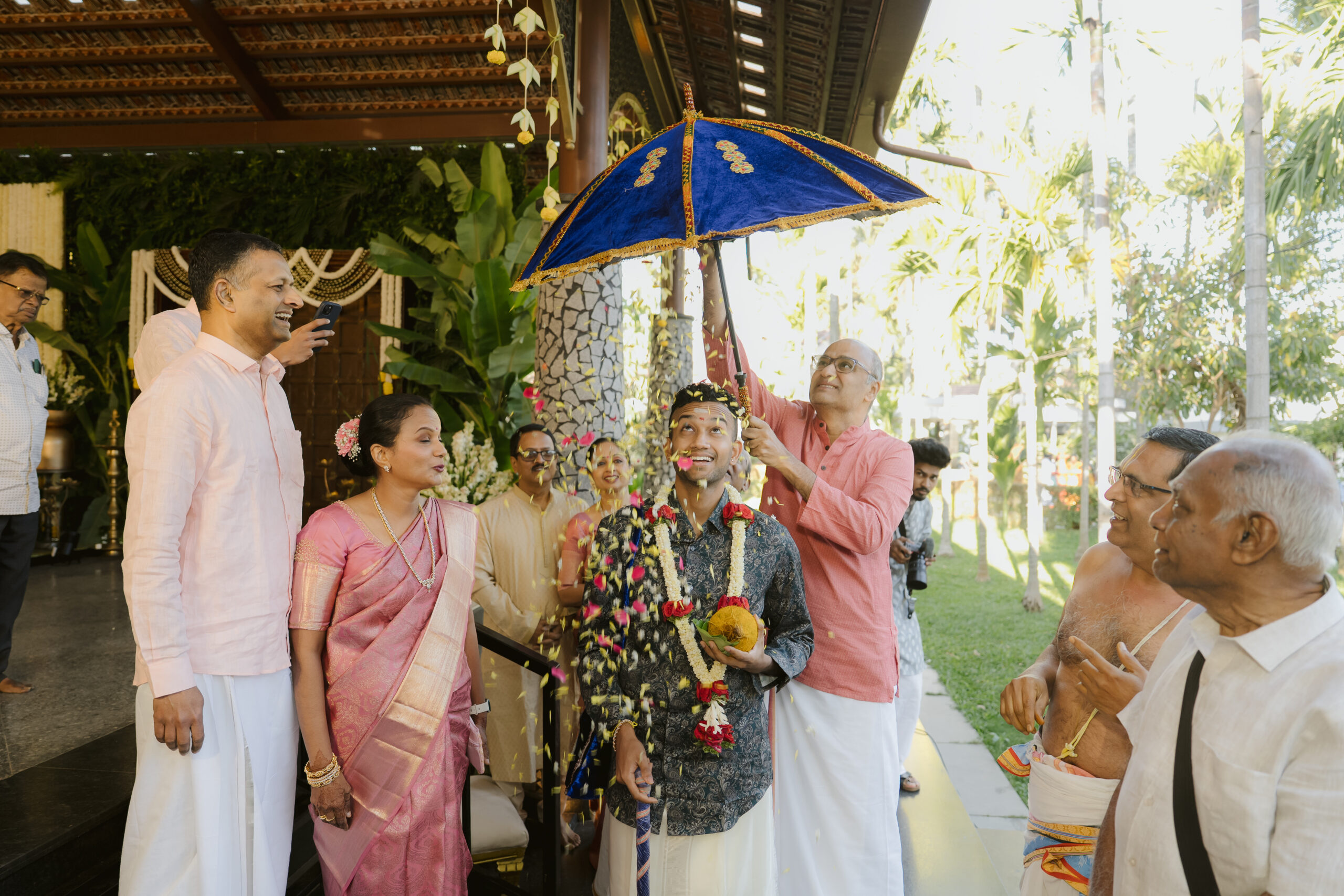
The groom symbolically prepares to leave worldly life behind and embark on a spiritual journey to Kashi. Carrying an umbrella and walking stick, he sets off, choosing a life of learning and solitude over marriage.
But before he can leave, the bride’s father gently stops him and invites him back, reminding him that a life of companionship, family, and shared responsibilities can be just as meaningful.
The ritual is often accompanied by laughter and smiles from guests, but beneath its playful nature lies a profound message. Marriage is not an obligation. It is a choice. A conscious decision to walk through life with another person by your side.
In many ways, this ritual captures the very essence of partnership.
2. Terasella: The Moment Two Worlds Meet
Among the many beautiful traditions in a South Indian wedding, few are as emotional as the Terasella ceremony.
Before the most significant rituals begin, a white cloth is held between the bride and groom, preventing them from seeing one another. Seated just a few feet apart, they are aware of each other’s presence, yet separated by a simple piece of fabric.
As sacred chants fill the air and family members gather around them, anticipation quietly builds. Everyone knows that a life-changing moment is approaching.
Then, at the auspicious time, the cloth is lowered.
For the first time during the ceremony, the bride and groom look into each other’s eyes as they prepare to begin their married life together.
The symbolism behind the ritual is deeply moving. Until this moment, they have lived separate lives, grown up in different homes, and created their own individual stories. The lowering of the cloth represents the removal of that separation and the beginning of a shared future.
It is a simple tradition, yet one that beautifully captures what marriage truly is—the meeting of two worlds, two families, and two lives becoming one.
3. Talambralu: When Blessings Feel Like Joy
Few moments bring as much laughter to a South Indian wedding as Talambralu.
The bride and groom shower one another with rice, often turning the ritual into a playful competition as family members cheer them on.
But beneath the smiles lies a deeper meaning.
Rice has long been associated with prosperity, abundance, and nourishment. By showering each other with rice, the couple is symbolically wishing one another a life filled with happiness, good health, and fulfilment.
What makes Talambralu so special is the way it blends blessing and celebration. It reminds us that even life’s most meaningful moments can be filled with joy, laughter, and playfulness.
After all, a successful marriage isn’t built only on responsibility—it is also built on friendship.
4. The Three Knots That Bind More Than Two People
In many South Indian weddings, the tying of the mangalsutra is among the most anticipated moments of the ceremony.
What many people don’t realize is that the three knots tied during this ritual carry deep significance.
The first knot is tied by the groom, symbolizing his commitment to the marriage. The subsequent knots are often tied by female family members, representing the support, blessings, and acceptance of the family.
It is a subtle yet beautiful reminder that marriage is never just the union of two individuals.
It is the coming together of families, traditions, and generations of love. While the couple begins a new chapter together, they do so surrounded by people who will continue to guide, support, and celebrate them through every stage of life.
In a culture where family remains at the heart of every celebration, this tradition serves as a touching reminder that love grows strongest when nurtured by a community.
5. Oonjal: Learning to Find Balance Together
One of the most graceful traditions in a Tamil wedding is the Oonjal ceremony.
The bride and groom sit together on a beautifully decorated swing while family members gather around them with songs, blessings, and prayers.
As the swing gently moves back and forth, elders offer their blessings for a happy and prosperous married life.
The symbolism is both simple and profound.
Life will never remain still. There will be moments of joy and moments of uncertainty. Times of celebration and times of challenge. Much like the swing itself, life will move in different directions.
The Oonjal ceremony reminds the couple that through all of life’s ups and downs, they will find balance by supporting one another.
It is one of the gentlest lessons in marriage, hidden within one of South India’s most beautiful traditions.
More Than Rituals
While every South Indian community celebrates weddings in its own unique way, the emotions behind these traditions remain remarkably similar.
They remind us that marriage is a choice. That two separate lives can come together to create something beautiful. That prosperity is best shared. That family plays an important role in shaping our journeys. And that life’s challenges become easier to navigate when we face them together.
Perhaps that is why these traditions continue to endure, generation after generation.
Because beyond the rituals, beyond the ceremonies, and beyond the celebrations, they tell stories that are deeply human.
Stories about love, belonging, family, and the beautiful journey of building a life together.
And no matter how weddings evolve, those stories will always remain timeless.