

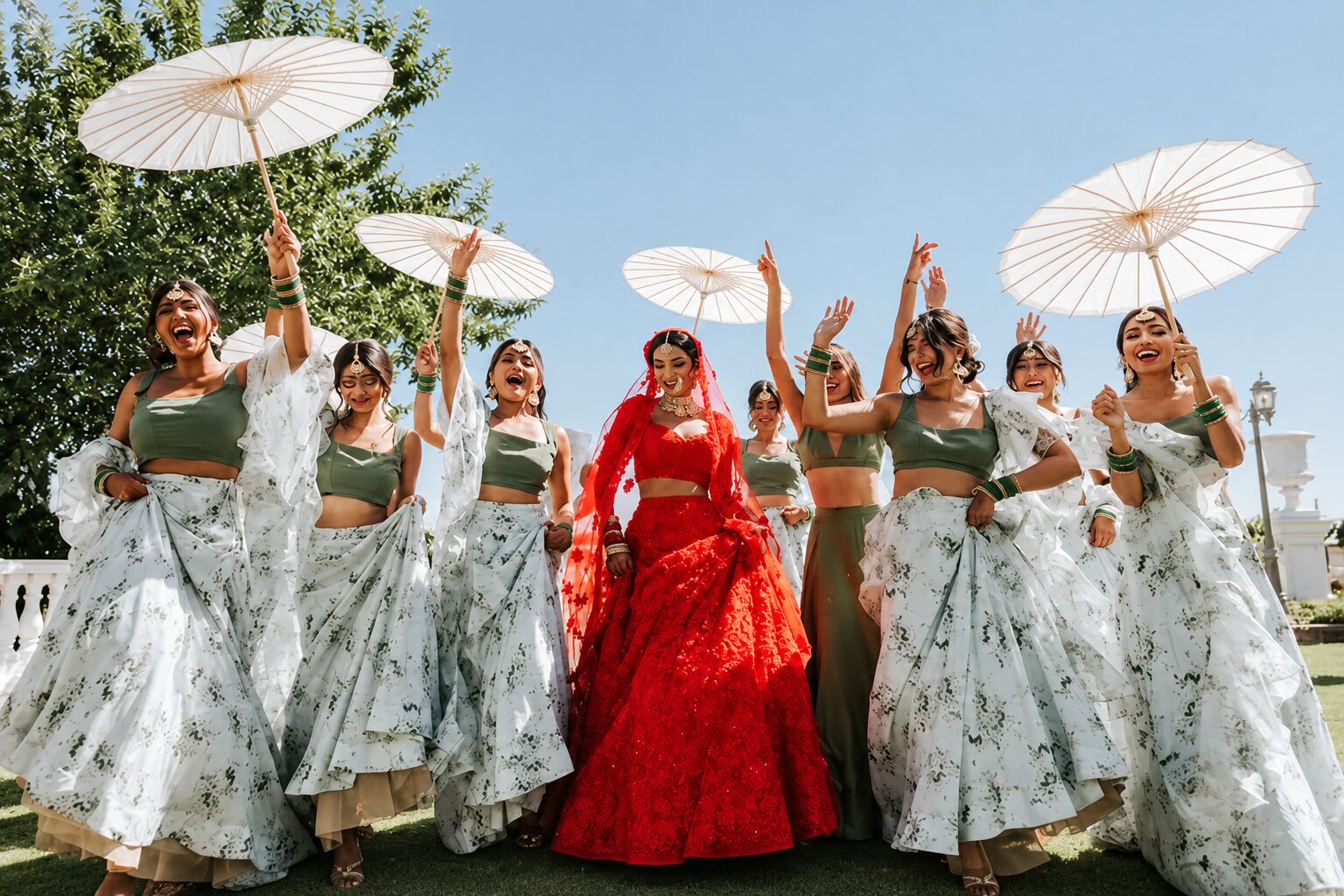
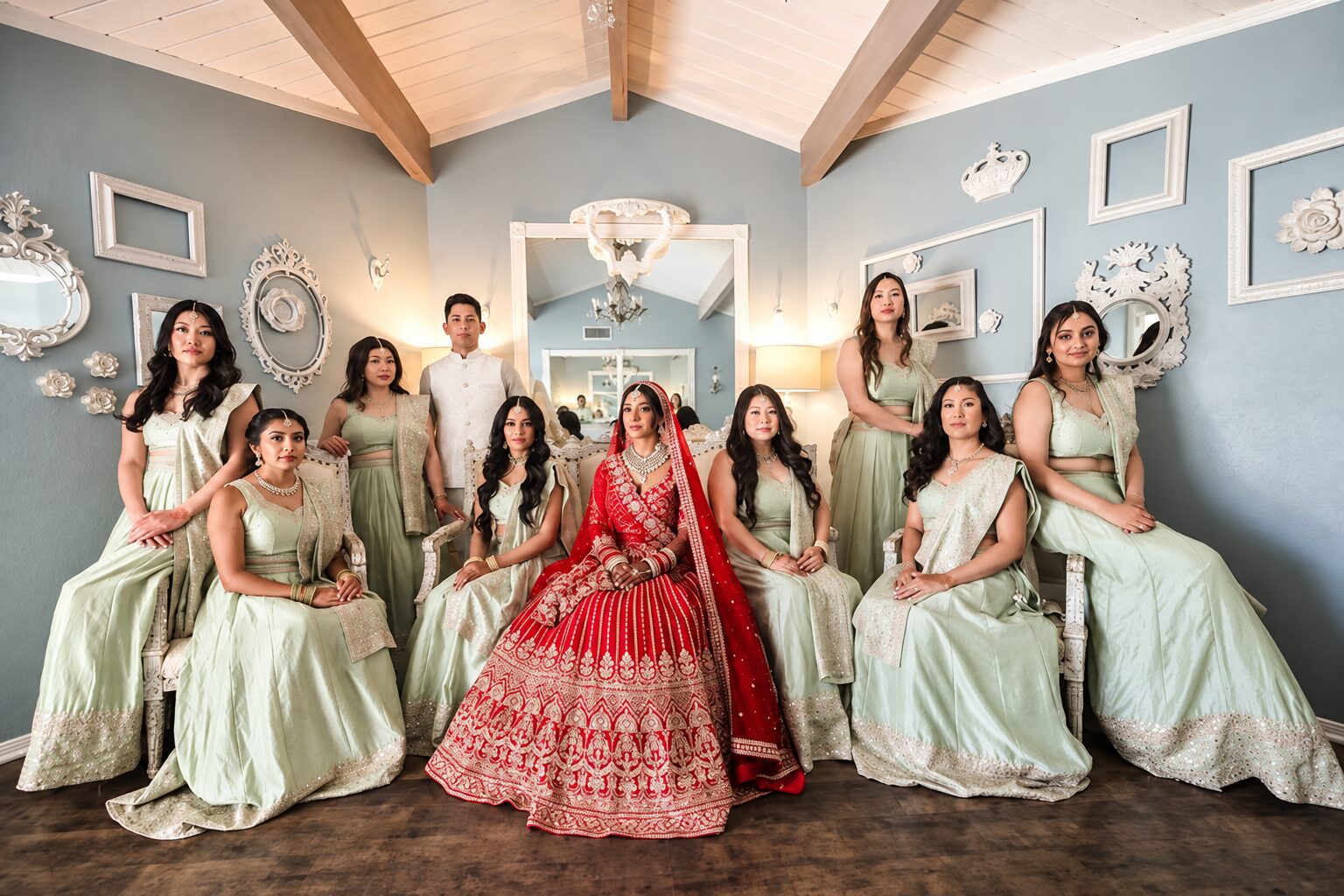
Nobody hands you a manual when you’re picked. There’s no orientation, no checklist slipped under your door. One day you’re just… it. The best friend. The cousin who’s basically a sister. The one she calls at 1 a.m. crying happy-tears about her lehenga fitting perfectly. And somewhere in that phone call, without either of you quite saying it out loud, you’ve signed up for weeks of duty dressed up as celebration.
Indian weddings don’t really have a “maid of honor” in the Western sense — they have something looser, warmer, and frankly more demanding: a small army of women who are equal parts stylist, therapist, bodyguard, and backup dancer. If you’ve been chosen for this role, here’s what nobody tells you, but everyone somehow already knows.
You might have picked a different mandap, a different color palette, a different way to do her hair. That’s okay. The moment you say yes to standing beside her, you also say yes to letting go of your own opinions the second they stop serving hers. Today, this week, this whole wedding — it’s beautifully, completely hers. Your job isn’t to have a vision. It’s to help her live out her own.
The moment you say yes, your phone becomes an extension of her nervous system. Blouse not fitting right two days before Sangeet? You’re the first call. Can’t decide between the rose gold or the antique gold jhumkas? You’re being sent seventeen photos at midnight. This isn’t an inconvenience — it’s the job. You answer, you reassure, you show up.
The days leading up to a wedding can feel overwhelming in ways nobody warns a bride about — the errands, the relatives, the sheer emotional weight of it all. A quick message, a call just to hear her voice, or showing up unannounced with her favorite snacks — these small gestures land harder than any grand one. She’ll remember who checked in that week long after she’s forgotten who sent the fanciest gift.
By the time she needs you, you should already be there — dressed, calm, hair and makeup done, ready to hold whatever needs holding. There’s a quiet skill in getting yourself ready fast enough that you’re never the reason she’s waiting, never scrambling for a safety pin while she’s the one who actually needs one. Being early isn’t about you. It’s about making sure you’re never unavailable in the exact moment she reaches for you.
There’s an art to dressing well at an Indian wedding without ever competing with the bride — not in color, not in shine, not in the sheer number of times someone says “wow” when you walk in. You’ll coordinate with the other girls, you’ll pick something that photographs beautifully next to her, and you’ll quietly retire the outfit you really wanted to wear because it was a little too close to her bridal shade. Nobody says this rule out loud. You just know it.
Sangeet night doesn’t care about your two left feet. Somewhere in a living room, weeks before the wedding, you will be taught choreography by a cousin who’s watched too many reels, and you will learn it — not because you’re graceful, but because the bride needs to look out from that stage and see her people moving for her. You mess up the count, you laugh, you keep going. That’s the whole point.
If something special is planned for her — a surprise performance, a hidden gift, a letter from her college best friend flying in without warning — you guard it with everything you have. No slips, no “almost telling her,” no cracking under her puppy-dog eyes when she senses something’s up. A good bridesmaid can lie beautifully for two weeks straight if it means watching her face break open in surprise on the day it counts.
Somewhere between the Haldi and the pheras, brides get quiet in ways they don’t expect. The excitement gets tangled up with grief nobody warned her about — leaving her parents’ house, becoming someone’s wife, closing one chapter mid-sentence. You learn to read the shift in her eyes before she says a word. You don’t always fix it. Sometimes you just sit next to her, turmeric still drying on both your arms, and let her have the quiet for a minute before pulling her back into the noise.
Indian weddings are crowded, loving chaos — distant relatives, forgotten cousins, a hundred people who all want a photo, a hug, five minutes of her time. Your unspoken duty is triage. You steer her gently away from the aunty who’ll talk her ear off before the muhurat, keep water and a snack ready because she hasn’t eaten since 7 a.m., and notice when her dupatta’s slipping before anyone else does.
Here’s the part that surprises people the most: the closer the wedding gets, the smaller your role becomes, and that’s by design. The final day belongs entirely to her. Your job in those last hours is to make sure everything runs so smoothly that nobody even notices the effort behind it. You’ve spent weeks visible — dancing, coordinating, laughing loudly in every function video — and now you fade into the edges of the frame so she can be fully, completely seen.
None of this is written anywhere. There’s no rulebook for Indian bridesmaids, no formal title, no sash. What there is instead is a quiet, almost old-fashioned kind of loyalty — the sense that when someone you love is stepping into the biggest transition of her life, you show up for every unglamorous, exhausting, joyful piece of it. Not because you’re asked to. Because somewhere along the way, her wedding became a little bit yours too.
And when she finally looks at you across the mandap, mid-ceremony, eyes full and grateful — you’ll understand exactly why you learned that terrible dance routine, why you answered the phone at 1 a.m., why you said yes in the first place.
If you’re gearing up to stand beside someone on her big day, know this: the unwritten rules aren’t a burden. They’re just love, translated into a thousand small tasks — and she’ll remember every single one.